
Crawl Space Encapsulation & Vapor Barrier in Commerce: What It Costs and Why This City’s Industrial Buildings Need It
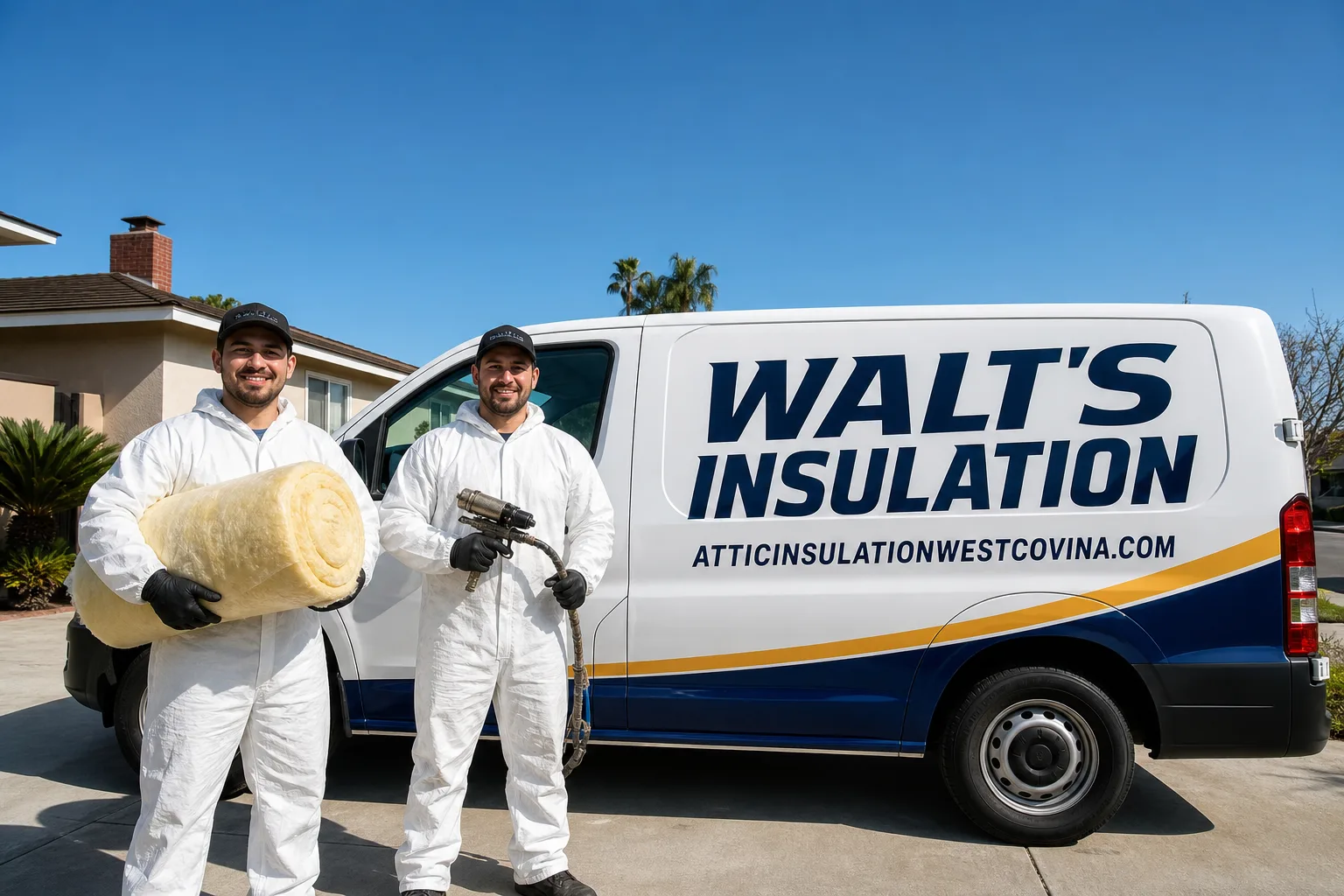
Crawl space encapsulation in Commerce typically runs $3.50 to $7.00 per square foot for commercial warehouse applications, and $2,800 to $8,000 for the rare residential job in this city. Here’s the thing most Commerce property owners don’t realize until an inspector is standing in their building: this isn’t a home-crawl-space market. Commerce is one of the most intensely industrialized municipalities in LA County, with about 13,000 residents but millions of square feet of tilt-up warehouses and manufacturing plants built in the 1950s through the 1970s. Those raised-floor sections under those buildings are where we do most of our encapsulation work here. When a logistics tenant pulls a tenant-improvement permit, Title 24 compliance often forces a crawl space retrofit nobody budgeted for. That’s where we come in. Call Walt’s Insulation at (626) 612-1532 and we’ll tell you exactly what your building needs before the inspector tells you.
What Triggered That Crawl Space Retrofit on Your Commerce Building
If you own or lease a warehouse in Commerce, you need to understand this: city and county inspectors routinely require the entire roof assembly to meet current Title 24 R-values when a tenant pulls a renovation permit on an aging industrial shell. What catches landlords off guard is that the triggered scope can extend below the building too. A tenant improvement that starts with new lighting and office build-out can spiral into mandatory insulation retrofits across 50,000 to 200,000 square feet of flat roof in a single permit cycle. And when the crawl space under a raised-floor section shows bare earth, standing moisture, or degraded insulation, the inspector flags it. You can’t get your final sign-off until it’s addressed. Our Crawl Space Encapsulation & Vapor Barrier team handles these inspections-driven retrofits regularly. We know what the inspectors in Commerce look for because we’ve been through this exact process dozens of times.
Why Commerce’s Industrial Buildings Have Worse Crawl Space Problems Than Nearby Homes
Commerce sits inland in the LA Basin where summer highs run 5 to 10 degrees hotter than the coast. But the real issue here is water. The city’s location along the LA River plain means the water table sits high, and that groundwater migrates into crawl spaces under raised-floor warehouse sections. Meanwhile, all those dark asphalt yards, flat industrial rooftops, and minimal greenery amplify the heat-island effect, so you’ve got heat baking the building from above while moisture rises from below.
What we see in Commerce that we don’t see in West Covina or La Puente is this: condensation from 1950s and 1970s flat roof runoff dripping down foundation walls, raising crawl space humidity until the vapor barrier delaminates at the seams. The water vapor then attacks whatever insulation is down there. This is a Commerce-specific failure pattern. The industrial zoning, the age of the building stock, the proximity to the river plain. It all compounds.
The other factor is what those crawl spaces are used for. In a house, a crawl space just sits there. In a Commerce warehouse, you’ve got forklift traffic above, heavy equipment vibration shaking the foundation, and HVAC condensate lines running through the underfloor area. Vibration loosens vapor barrier seams. Condensate leaks add point-source moisture that a standard 6-mil barrier can’t handle. That’s why we spec 12-mil reinforced barrier on commercial jobs here, not the residential-grade stuff.
Our Crawl Space Encapsulation & Vapor Barrier Services in Commerce
Crawl Space Vapor Barrier
We install 12-mil reinforced vapor barriers in Commerce commercial crawl spaces, not the 6-mil material you’d put under a house. The heavier barrier holds up to forklift vibration, occasional maintenance traffic from our own crews, and the relentless moisture pressure from the LA River plain’s high water table. We lay it over the bare earth, seam it properly, and seal the perimeter with butyl tape and mechanical fasteners. If your warehouse crawl space still has dirt and cracked poly from the 1980s, this is the first thing to fix.
Crawl Space Encapsulation
Full encapsulation in Commerce means sealing the entire crawl space envelope: vapor barrier over the floor, sealed vents, insulated rim joists, and sometimes a dehumidifier for buildings with persistent humidity from adjacent loading docks or wash-down operations. We’ve done this under logistics facilities off Bandini Boulevard, under light-manufacturing buildings near the 5 Freeway, and under food-processing plants where moisture control is a health-code issue. Encapsulation isn’t a one-size job here. Each building’s foundation type, vent configuration, and drainage pattern determines the approach.
Crawl Space Insulation
Most Commerce warehouse crawl spaces have either no insulation left or fiberglass batts that are sagging, moldy, and doing nothing. We use Knauf crawl space insulation, which is engineered for high-moisture environments and doesn’t absorb water the way fiberglass does. We install it against the rim joists and subfloor, never in direct contact with damp concrete or earth. The difference in floor temperature above the crawl space is immediately noticeable, which matters when you’ve got employees working at floor-level stations in a manufacturing building.
Crawl Space Moisture Control
Moisture control in Commerce isn’t optional. The water table under the LA River plain is high enough that some warehouse crawl spaces see standing water after heavy rain, even if the building has never flooded. We address this with perimeter drainage recommendations, sump pump installation when needed, and vapor barrier systems designed to keep groundwater vapor from reaching the building’s structural components. Our crew encapsulated the raised crawl space under a 1960s tilt-up warehouse off Bandini Boulevard after a tenant improvement for a logistics company triggered Title 24 review. The original bare-earth floor was sweating into the steel support beams; we laid a 12-mil reinforced vapor barrier over the dirt, sealed the perimeter with butyl tape, and added Knauf crawl space insulation to the rim joists, cutting the humidity that had been corroding the building’s lower steel supports.
What happens when you call
- 1
A real person answersNo phone trees - you reach a local pro.
- 2
You get an upfront price rangeHonest numbers before anyone is dispatched.
- 3
A background-checked tech heads outLicensed & insured, dispatched right away.
- 4
You approve before work beginsNothing starts until you say go.
Trusted Brands We Service in Commerce
We stock and install Knauf, Owens Corning, and Icynene products for Commerce jobs. Knauf’s crawl space insulation is our go-to for commercial underfloor applications because it holds up in high-moisture conditions that destroy fiberglass. Owens Corning provides the vapor barrier and air sealing materials we use on perimeter sealing jobs. Icynene’s closed-cell spray foam comes into play when a Commerce building needs rim joist air sealing in addition to insulation. We keep these materials in stock locally, which means faster turnaround when your permit deadline is looming.
Common Crawl Space Encapsulation & Vapor Barrier Problems We See in Commerce Buildings
- Groundwater saturation from the LA River plain. The water table under Commerce keeps crawl space humidity elevated year-round. Fiberglass batts soak up that moisture, sag, and leave the floor assembly uninsulated. By the time we’re called, the batt is usually hanging down like wet laundry.
- Vapor barrier delamination at seams. Condensation from flat roof runoff dripping down foundation walls raises humidity until the barrier fails at the seams. Moisture gets back through, and the encapsulation job effectively reverses itself.
- Rodent damage to existing barriers. Unsealed crawl space vents in aging industrial buildings let rodents in. They tear vapor barriers, drag in nesting material, and hold moisture against the subfloor. We see this on nearly every Commerce building that hasn’t had vent sealing done.
- Corroded steel support beams from underfloor humidity. This is the expensive one. Bare-earth crawl spaces under tilt-up warehouses sweat moisture into the steel supports. Over years, that corrosion compromises the building’s lower structure. Encapsulation stops it, but it doesn’t reverse what’s already there.
Pricing for Crawl Space Encapsulation & Vapor Barrier in Commerce, CA
We Also Serve Cities Near Commerce
If you’re in Commerce or the surrounding areas, we cover West Covina, La Puente, Irwindale, and Whittier as well. Most of our Commerce work is commercial crawl space encapsulation, but we also handle the residential jobs in those neighboring cities that have more traditional housing stock.
Serving Commerce, CA - Our Local Coverage Area
We’re based in the Commerce area and know this community well. Use the map below to see our service coverage - if you’re nearby, we can almost certainly help.
FAQs - Crawl Space Encapsulation & Vapor Barrier in Commerce
Does Title 24 compliance during a Commerce warehouse tenant improvement also require crawl space encapsulation?
No, Title 24 doesn’t require encapsulation specifically, but it does require the building envelope to meet current insulation standards, and inspectors can flag a crawl space with visible moisture issues, exposed earth, or degraded insulation. When that happens, encapsulation becomes the de facto requirement to get your final sign-off. We’ve gone through this process with Commerce inspectors many times and can tell you upfront what they’re likely to flag. Call (626) 612-1532 before your tenant improvement starts so you can plan for the cost.
Why is crawl space humidity worse under Commerce industrial buildings than under nearby single-family homes?
It’s the combination of geography and building type. Commerce sits on the LA River plain with a high water table, so groundwater migration into crawl spaces is constant. On top of that, the city’s industrial buildings are mostly from the 1950s to 1970s, with flat roofs that shed runoff against foundation walls. That runoff condenses and drips downward, feeding humidity from above while the water table feeds it from below. A single-family home in Whittier or La Puente doesn’t have either problem at the same intensity.
Can crawl space encapsulation stop corrosion on the steel support beams under an older Commerce warehouse?
Yes, it stops the progression. Encapsulation removes the moisture source that causes steel support beams to corrode. It won’t reverse corrosion that’s already there, but it will prevent new rust from forming. For buildings where the steel is already significantly compromised, we recommend bringing in a structural engineer to assess what needs reinforcement, and we’ll handle the moisture side so the problem doesn’t continue.
What vapor barrier thickness do you recommend for a Commerce commercial crawl space with heavy equipment vibration?
12-mil reinforced minimum. The standard 6-mil residential barrier will tear at the seams under forklift traffic and constant vibration from manufacturing equipment. The heavier material holds up to the movement, and we seam it with butyl tape plus mechanical fasteners so it doesn’t delaminate the way lighter barriers do. For food-processing or pharmaceutical buildings with wash-down operations, we may spec an even heavier barrier or add a drainage layer.
Do you remove old, water-damaged insulation before installing a vapor barrier in a Commerce warehouse crawl space?
Always. Leaving old fiberglass batts in place under a new vapor barrier traps moisture between the barrier and the subfloor, which accelerates mold and continues to hold water against the structural members. We remove everything, inspect the subfloor and rim joists for existing damage, make any needed repairs, and then install new Knauf insulation where it belongs. It adds labor cost upfront but prevents the encapsulation from failing within a few years.
Call Walt’s Insulation for Crawl Space Encapsulation in Commerce
We’re locally owned and owner-operated, founded in 2000 by Walt Brenner. When you call (626) 612-1532, a live person answers. Not a voicemail, not an answering service. We’ll ask about your building, give you straight answers, and schedule a site visit with no trip charge in our service county. Every job is backed by the Done Right Promise: if it’s not done right, we make it right. No runaround. We also offer a free second opinion on any written estimate, $40 off any repair over $200, and a permanent 10% discount for seniors and veterans. If you own or manage a Commerce industrial building and you’re facing a Title 24 inspection, a failed permit sign-off, or just a crawl space that’s been ignored for 40 years, call us today.
Written by Walt Brenner, Owner at Walt’s Insulation, serving Commerce since our founding in 2000.